Different Capacitors for Electronic Detonators: Choosing the Right Energy Storage Solution
2026-04-26
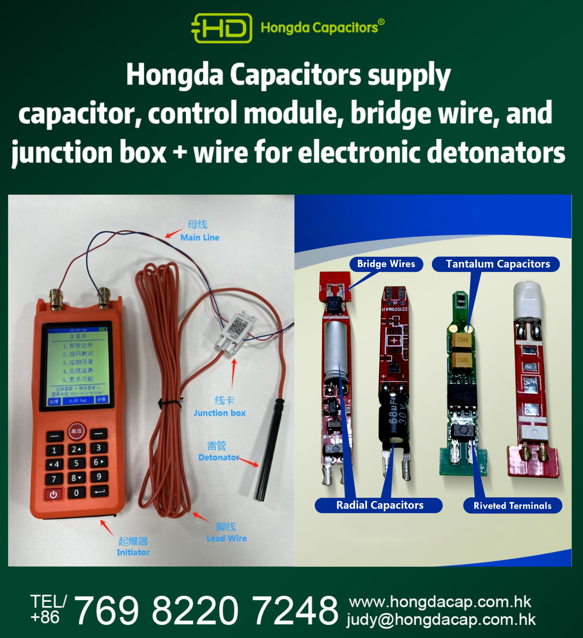
Electronic detonators rely on precise, reliable energy delivery to trigger ignition safely and consistently. The capacitor, as the core energy storage component, directly determines the detonator’s performance, reliability, and lifespan. Among the most common options—tantalum capacitors, aluminum electrolytic capacitors, and multi-layer ceramic capacitors (MLCCs)—each serves distinct roles, and their differences make them far from interchangeable. Below is a detailed breakdown of their characteristics, applications, and suitability for electronic detonator designs.
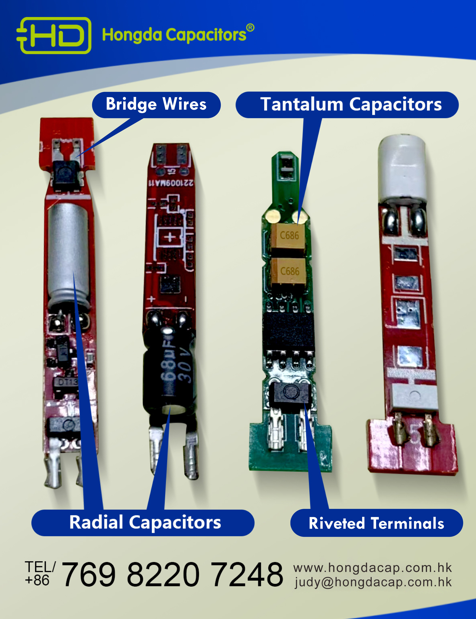
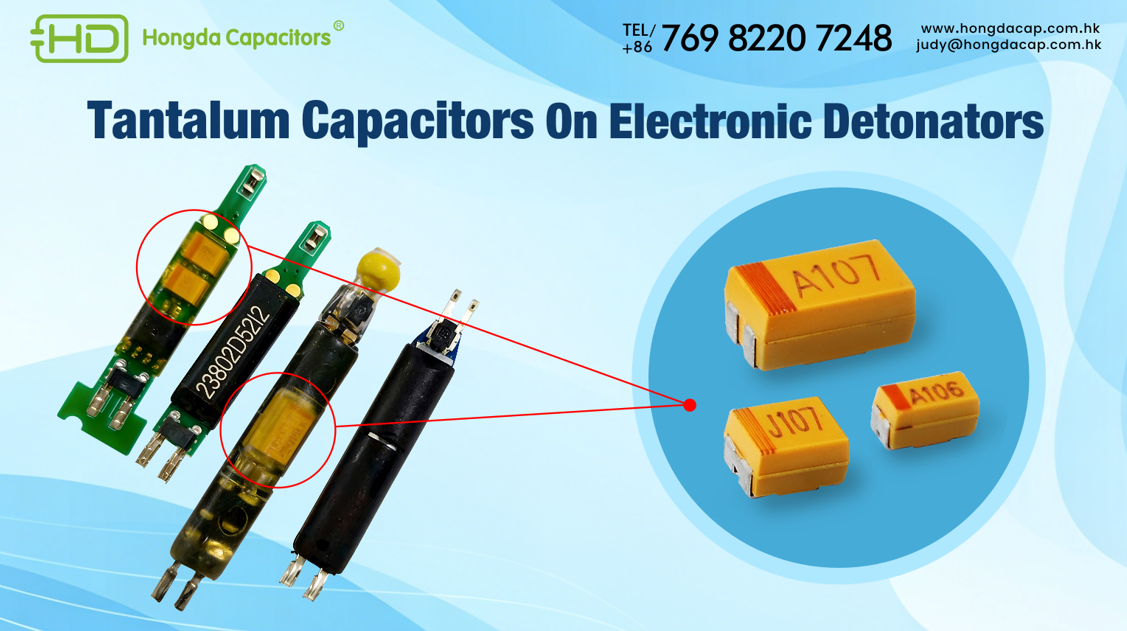
1. Tantalum Capacitors: The Preferred Choice for High-Reliability Applications
Tantalum capacitors are widely recognized as the industry standard for mid-to-high-end electronic detonators, thanks to their exceptional performance in harsh conditions.
Key Advantages
Unmatched Temperature Stability: With capacitance variation of less than 10% across -40°C to 85°C, tantalum capacitors maintain consistent energy storage even in extreme cold or heat, eliminating the risk of misfires caused by low-temperature capacity decay.
Ultra-Low Leakage & Long-Term Energy Retention: Minimal leakage current ensures the capacitor retains its stored energy over long shelf lives, a critical feature for detonators that may sit idle for months or years before use.
High Mechanical Robustness: Their solid construction delivers excellent resistance to vibration and shock, making them ideal for underground mining, open-pit blasting, and other rugged environments.
Low ESR for Fast, Efficient Discharge: Low equivalent series resistance (ESR) enables rapid, high-current discharge, which is essential for triggering bridge wires reliably and with minimal energy loss.
Typical Applications
Primary energy storage/ignition capacitors in high-reliability detonators (coal mining, tunneling, and industrial blasting).
Wide-temperature-range detonators operating in cold or high-altitude regions.
Long-shelf-life detonators requiring consistent performance over years of storage.
Common specifications range from 47μF to 220μF, with voltage ratings of 6.3V to 20V, packaged in SMD (Case A/B/C) or axial configurations to fit compact detonator PCBs.
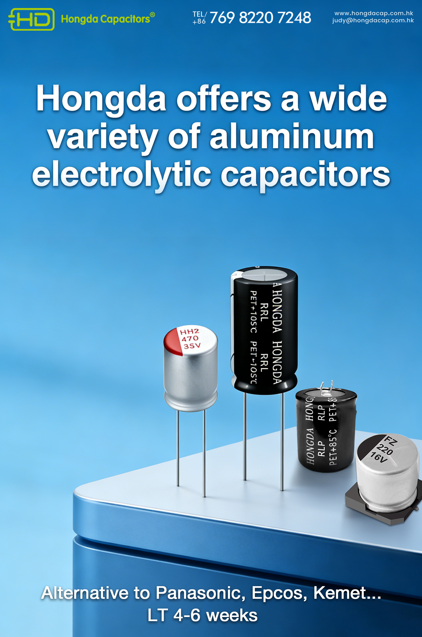
2. Aluminum Electrolytic Capacitors: A Limited-Cost Backup Option
Aluminum electrolytic capacitors (both liquid and solid-state variants) are sometimes used in low-cost detonator designs, but their performance limitations make them unsuitable for high-reliability applications.
Key Characteristics
Poor Low-Temperature Performance: Liquid aluminum electrolytic capacitors can lose over 30% of their capacitance at -40°C, leading to insufficient ignition energy and misfires in cold environments.
Higher Leakage & Degradation: Liquid types suffer from electrolyte evaporation over time, causing increased leakage and reduced energy retention. Solid-state variants improve on this but still lag behind tantalum capacitors in long-term stability.
Moderate ESR: Liquid electrolytic capacitors have higher ESR, leading to slower discharge and greater energy loss during ignition.
Typical Applications
Auxiliary power filtering in low-cost detonators.
Backup energy storage for room-temperature, short-shelf-life civil blasting detonators.
They cannot directly replace tantalum capacitors without full circuit redesign, and even then, they are only suitable for non-critical, mild-environment use cases.
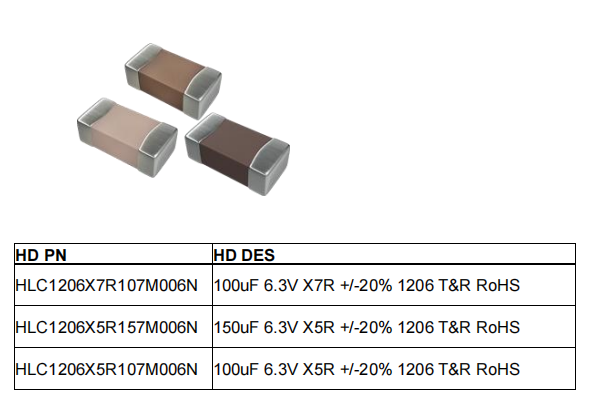
3. MLCCs (Multi-Layer Ceramic Capacitors): Not for Energy Storage
MLCCs are ubiquitous in electronic circuits, but they are fundamentally unsuitable as primary energy storage capacitors for electronic detonators.
Key Limitations
Severe DC Bias Effect: High-K MLCCs can lose 50% or more of their rated capacitance under operating voltage, rendering them unable to store the required ignition energy.
Low Maximum Capacitance: Most MLCCs top out at a few microfarads, far too small to power the high-current discharge needed for bridge wire ignition.
Mechanical Fragility: Larger MLCC packages are prone to cracking under vibration or thermal stress, posing reliability risks in blasting environments.
Typical Applications
High-frequency filtering and decoupling for detonator control circuits (MCUs, timing chips).
Noise suppression to ensure stable signal transmission and prevent unintended ignition triggers.
MLCCs are essential auxiliary components but cannot serve as the primary energy storage element.
4. Critical Considerations When Choosing a Capacitor for Electronic Detonators
Voltage Rating Safety Margin: Always select a capacitor with a voltage rating of 1.5–2 times the actual working voltage to avoid overvoltage failure.
Environmental Conditions: For wide-temperature or high-vibration applications, tantalum capacitors are the only reliable choice.
Long-Term Reliability: Low leakage and stable capacitance over time are non-negotiable for detonators with multi-year shelf lives.
Circuit Design Compatibility: Capacitor ESR, discharge speed, and form factor must align with the detonator’s ignition circuit requirements.
5. Final Recommendation
For most electronic detonator applications, tantalum capacitors remain the optimal choice, offering the best balance of stability, reliability, and performance. Aluminum electrolytic capacitors may be considered for low-cost, mild-environment designs, but they come with significant trade-offs in longevity and cold-weather performance. MLCCs play a vital supporting role in filtering and noise suppression but are never suitable for primary energy storage.
By selecting the right capacitor for your detonator design, you can ensure safe, consistent ignition in even the most challenging blasting environments.
Hongda Capacitors specializes in high-reliability tantalum capacitors tailored for electronic detonator applications. For custom specifications, samples, or technical support, contact us at judy@hongdacap.com.hk or visit www.hongdacap.com.hk.


 English
 Chinese Simplified
 Russian
 Vietnamese
 Spanish
 Portuguese
 Arabic
 German
 Korean
 Polish
 Italian
 Turkish
 Belarusian
 Bulgarian
 Croatian
 Czech
Czech
 Danish
 Dutch
Dutch
 Estonian
 Filipino
 Finnish
 French
 Hungarian
 Indonesian
 Irish
Irish
 Japanese
 Lithuanian
 Norwegian
 Romanian
 Serbian
 Slovak
 Slovenian
 Swedish
 Thai
Thai


